Monday, June 14, 2021

This may throw a wrench in our plans...

 https://www.cdc.gov/importation/bringing-an-animal-into-the-united-states/high-risk-dog-ban-frn.html

So the CDC is now saying dogs cannot come into the US from Belize.  You can apply for an exemption, but the process is long and involved and expensive, and we don’t legitimately qualify for any of the exemptions. 

So, if you were looking forward to seeing us...I guess it will have to wait until this “temporary” ban ends. 

We remember, once again, why we moved to Belize. 

Sunday, June 13, 2021

Design Details: The Shell

We are taking a step back here, but one of the first decisions we had to make was what kind of shell we would put on the back of the truck.  You already know we decided on an aluminum frame and aluminum skin, but lots of ideas were considered and tossed before we came to that decision.  We thought about reclaiming a box truck, which would have a ready made shell, but decided that it would be a pain to add the cab over, and probably wouldn’t be in great shape.  We also looked at an ambulance back, which was great because it was already wired and plumbed, but it didn’t provide the space we needed for using the camper for more than weekends, and would have required a lot of modification for our cargo requirements.  We considered getting a junked school bus and having the top attached to our flatbed, but decided it would be more trouble than it was worth, probably would be too heavy, and would most likely end up looking like the Frankenstein monster of campers.  It was only after thinking through all of these options that we even decided to talk to Koops Tinsmith and get a quote for an aluminum shell, and we were pleasantly surprised that their quote was very reasonable.

It was like magic!  We could suddenly see how it would take shape.


We already blogged about our basic requirements, and we had already put a lot of thought into that as we were making the decision about the shell.  That made it easy to come up with a general sketch of what we wanted, and go to Koops to turn that into a CAD drawing that would not only give us a picture of what we were imagining, but also give Koops a good idea to make a estimate based on materials and the time they would take to build it.  But, we still had a lot of decisions to make.


Our first decision was about the floor.  While we bought the truck partly because of the flatbed, we’ve realized that this particular flatbed is quite heavy.  We briefly thought about taking it off and having a lighter floor built as part of the camper build, but in the end decided to try to conserve weight elsewhere and keep the flatbed as we bought it.  It’s very sturdy and well made, and will make a great base for whatever we put on top.


We then had to figure out how the walls, ceiling, and basic shell would be constructed.  They need to be strong enough to not only support themselves, but also to support whatever needs to be attached to, and possibly hung from, them inside. They also need to be insulated, because we are planning on using the camper in a wide range of temperatures, and they to be able to keep the cool in when it’s hot, and the heat in when it’s cold.  They need to accommodate windows and vents, as well as doors.  We talked to Justin at Koops, and came up with a plan for an aluminum skin with 2” foam board insulation.  We are still working out details on exact measurements, but we have a plan.


The U-shaped blue metal will be the wall, which will have insulation inside the U, and the inside window frame will be screwed to the outside window frame from the inside.


We also had to think about doors and windows.  We thought about repurposing windows and doors from one of the many junked campers that exist in Belize as well as everywhere else, but decided that since we know exactly what we want, it would be more expensive but ultimately better quality and more satisfying for us if we bought new windows.  We then thought about getting house-type windows custom made, but after talking to local window manufacturers, we determined that those windows are not meant to be installed on a moving, flexing wall and we would undoubtedly have no end of problems.  So, Tom found a company that manufactures RV windows.  We then had to decide if we wanted the more expensive custom windows, or stock sizes, and decided that since the stock sizes were so much less expensive, we could work our design around the windows.  After determining what windows we wanted, Tom placed an order and had them shipped to Belize.  He also ordered an RV door which will be used to access the living quarters. 


One of the many windows, just waiting for a shell so it can be installed.


Koops will build the rear doors, which will swing out and will be the entire back side of the structure.  These doors will open into the cargo/utility area, which will be separated from the living quarters by an interior wall, which will also be insulated.


The rear doors will swing out like a cargo box truck’s doors.

The roof became surprisingly complicated, because it has so many purposes beyond just being the top of the camper and keeping the weather out.  It will have three vents whose placement is dictated by the inside design of the living space, but will also need to fit an array of solar panels, which is still to be determined.  We’ve discussed putting a rail around the top, which would be useful both for tying down things we may carry on top, and for running wires for the electrical system, and possibly anchoring water lines if we rig up a solar water heater.  And, if any space is left over, we may consider a roof top deck to be accessed from the escape hatch over the bed.  


We are meeting with Justin at Koops tomorrow to iron out some of the finer details and to schedule dropping the truck off to start the build.  We have a room full of windows and vents, as well as appliances we’ve already bought, and are waiting only for the living quarters door, which should arrive at the end of the week.  It is starting to seem real!


Lots of stuff, waiting...


Wednesday, June 9, 2021

Ground Transportation Decisions

Ever since we started thinking about taking this trip, we realized that before we could think about building something we really liked, we had to decide what we wanted to do.  Basically this means thinking about where we want to go and what level of comfort we want, but we realized that those general desires entail a lot of specific requirements.  For example, “where we want to go” doesn’t just mean deciding which National Parks we want to visit, but also whether we want to stay in the main stream easily accessible RV campgrounds, or look for more out of the way rugged isolated camping spots.  Anyone who knows us knows it didn’t take much thinking on our part to decide we’d rather stay in the more out of the way places, but that decision leads to other decisions we need to make, and those decisions lead to thoughts about design features for the camper, and then we have to think about how fancy we want to be, and on and on and on.


The current example of this type of thinking, which has been consuming vast amounts of time and bandwidth as we have waited for the underside of the bed to be completed so we can start on the top, is what we are going to do for local transportation if we park the camper in some out of the way place.  We don’t really want to have to break camp every time we decide we need to run into the nearest town for a few groceries, and we recognize that we may sometimes be farther out than would be convenient for walking or taking a bicycle.  So, we decided that we would include a motorcycle garage as part of the camper and take at least one motorcycle with us.


This may seem a simple decision to most people, but if you know us, you know that there are all sorts of complications.  The most common sense solution would be to build the garage for one motorcycle that would be big enough to carry the two of us, but small enough to be easily loaded without adding excessive cargo weight.  But, I (Marge), don’t really want to usually be the passenger, and if we had one bike and both wanted to go somewhere, two passengers would limit how much stuff we could carry.  This lead to the decision that we each wanted our own bike.


We already had an idea of general requirements for motorcycles.  Since we will be traveling through the US, we want bikes that can be legally ridden on the roads there, and can be insured.  We also want bikes that allow us to get parts and maintain them in the US.  We also know that weight matters both for keeping our cargo load down, and for ease of loading and unloading.  Here in Belize, we each had a Lifan 250, which is a low cost (and fairly low quality) Chinese bike.  We realized early on that they wouldn’t be ideal for taking to the US because of both the insurance and maintenance issues, but they did give us a good idea of size and weight parameters, since we knew that a bike that size weighed about 350 pounds, and was 85’’ long and 36” wide at the handlebars. 


Our Lifan 250s

With this in our heads, we started more extensive discussions about what requirements each of us had for a motorbike as ground transportation.  I simply want something to run fairly short errands, maybe pack a lunch and ride to a trailhead for a hike, possibly explore ahead if we are heading down a road where we think we may have trouble either passing or turning around, and, in an emergency if the camper rig breaks down, be able to unload the bike and go for help.  I don’t need to go off road, I don’t need to go too fast, and I want a bike that I’m comfortable loading and unloading on my own.


Tom wants basically the same things, although he also wants a bike that he can take to cruise around with a group of friends for a day without holding them back.  He also has more interest in going off road.  And, we both think it would be a good idea if we had at least one bike that could be safely ridden on a limited access highway at higher speeds, just in case we have to get somewhere.  While I don’t like to admit it, Tom is also stronger than I am, so loading and unloading a bigger bike on his own isn’t quite so scary for him as it is for me.


We used the weight and size of the two Lifans as working parameters to figure out the necessary size of the bike garage.  We want to make it as small as possible so there is more room in the living space, but we don’t want to make it impossible to load the bikes.  After going around and around on this, we finally decided that it would be a good idea to get the bikes before starting the build, so if we have to make minor adjustments to what is currently planned, we can do it on paper and not have to move actual walls.


We made a few decisions.  We decided that we will get Honda, Kawasaki, Suzuki, or Yamaha bikes since those manufacturers are popular in the US.  We also decided that I would get a small scooter-type bike, while Tom will get something with a little more umph. Because the scooters are about 150 pounds lighter than the Lifans, this gives Tom a little extra weight allowance based on our original plan if he wants a bigger bike.  And we decided that getting the bikes right now in Belize is a good idea not only for the camper planning issue, but also because it will prevent us from having to worry about importing anything when we return to Belize.


Marge on her new Honda Wave.  

So, last week, we went out and bought a Honda Wave 110S for me.  It’s light enough that I can handle it, and peppy enough to keep me happy without letting me get in too much trouble.  It’s road legal everywhere we want to go, and from all the reviews we’ve read, it will be dependable like a typical Honda.  And, its light weight gives Tom a little wiggle-room for his decision, which is still in process.  He’s narrowed it down to a Honda 250 or a Honda 400, or, possibly, some sort of Kawasaki, although advice he’s getting from knowledgeable friends has him leaning away from this because of the weight.  He’s also considering just keeping the Lifan 250 if he can’t find anything he wants here, and maybe a smaller bike would be okay, but...round and round we go.  


We are still waiting for a few more parts for the camper build, so Tom has a few more weeks to make his decision...so stay tuned!

Monday, May 31, 2021

Preliminary Modifications

We left the last blog installment with the exciting-to-us news that our truck had been dropped off at Koop’s Tinsmiths for some pre-camper build modifications.  To understand the modifications, and how they are moving us closer to what we want for our final build, it will help to know what the truck is, and why we chose this particular truck as the base for our traveling home.


The truck is a 2010 Ford F-350 diesel dually with the 6.4liter diesel engine and a 14-foot flatbed.  It was custom ordered in the US by our neighbors for their large scale bee-keeping operation before they moved to Belize.  When they moved to Belize, they brought the truck with them, but with the smaller operation they are running here, they barely used it, and it has only the 30,000 miles on it that it had when they shipped it here. They decided to sell it in 2019, which is when we started thinking about what we wanted to do for our travels, and since it was living a half mile down the road with such low mileage, we jumped on it.  We had been looking for an older model diesel Ford because we intend to drive through Mexico, Central America, and South America with it, and many of the newer “features” on the diesel trucks make them impractical to drive in countries where there aren’t many high tech Ford dealerships.  Plus, this truck seemed to be made with our plans in mind; the 14-foot flatbed gave us plenty of options for a camper back and cargo, plus the flat bed has an air-ride suspension that will be ideal for both carrying and leveling mobile living quarters.


Before we could even think about what to do with the underside of the flatbed, we (well, the Tom part of the we) had to do a little remedial work on the truck since, despite the low mileage, the truck had been mostly sitting in our tropical climate, which isn’t especially healthy for hoses, belts, brakes, and moving parts in general.  


Tom did a lot of work on the suspension of the truck since all of the rubber body mounts had rotted.  He also replaced hoses and belts for the cooling system, as well as pressure lines.  He also needed to make some exhaust modifications.  And, a few of our maiden voyages in the truck ended with burning brakes, so that problem needed to be diagnosed and remedied.


For more detailed information, Tom will write up a separate post, no need to bore everyone with details they don't want!


The flatbed came with a few storage trunks, as well as storage for the air-ride air compressor, a spare compressor, and a spare tire carrier.  It also had a trailer hitch attached to the frame, but the receptacle for the hitch was a couple of feet under the back of the flatbed. We are planning to use the under-bed storage for spare fuel, spare water, tools, and 2 spare tires.  This meant we had to do a little bit of reconfiguring, although in the interest of saving money and materials, we wanted to use or re-use what came with the truck as much as possible.  


The new compressor boxes are on top, and the old storage box is still under the bed.


Close up of the new compressor boxes
Close up of the new compressor boxes.

The reconfigured storage locker, customized for carrying extra fuel.


The first step was to move the hitch back so it would actually be useful if we wanted to tow something.  That project broke a number of drill bits and involved a few skinned knuckles, but finally the hitch receptacle is even with the back of the bed.  This also created some more room under the bed in the frame of the truck, which gave us more flexibility for air compressor compartments, as well as the space for a gray water tank in addition to reconfigured storage boxes.


This gives us two large compartments for carrying fuel and water containers, as well as tools.  It also gives us room for two spare tires, which we feel are necessary for driving through Mexico and Central America. An approximately 15-gallon gray water tank will fill from the topside of the deck, and have easily accessible drainage options under the truck.  And, the two air compressors are accessible both for fixing tires or doing anything requiring compressed air, and for trouble shooting the truck’s air-ride suspension.  

The final upgrade to the bed will be suspension stops that will prevent the bed from falling on the tires and the frame of the truck if the air-ride suspension fails.  We have been told by a number of unbiased mechanics that this is a top of the line air-ride system, used mostly on semi tractor trailers, but we know from experience that even the best equipment eventually wears out and sometimes fails, especially in our type of climate.  So, before we add any more weight to the flatbed, we will have emergency stops installed.  

Sunday, May 16, 2021

Camper Design Process

We bought a big pickup truck with a 14-foot flatbed.  With time to kill during the Covid-19 shutdown, we decided that instead of purchasing a slide-in truck camper, we would build a custom back for our truck.  This idea appealed to us for a few reasons.  First, the endless planning required to get us results we would be happy with for the long term gave us plenty to talk about when not much else was going on around here.  Second, we could get exactly what we wanted and not have to compromise on size or features.  Third, with a little research, we realized that we could get exactly what we wanted for far less money than if we custom ordered a camper from a recognized manufacturer.  We just had to figure out WHAT we wanted, and HOW to get it done here in Belize...so, back to our first reason of having lots of time to think and plan and research.


What did we decide we wanted?  Fortunately for us, we both had careers in software design where requirements analysis was a required skill, and something at which we both excel.  It took us a while, but our bullet list of high level primary requirements looks something like this:


    • Must fit on the 14’ flatbed
    • Must be light enough to be safely carried by the Ford F-350 Super Duty diesel dually pickup
    • The whole rig must remain agile enough that we can get into remote locations
    • Must have enough space for us, our dogs, and what we consider required cargo
    • Must be able to boondock/be completely off grid with options for shore hookups
    • Must have features so we can live in it for indefinite period of time, possibly years
    • Must have systems (gas/water/electricity) that will work throughout North America, Central America, and South America in a wide variety of environments


We also have a couple secondary requirements where we are allowing ourselves some wiggle room, including:


    • Systems and appliances can be reused/converted when we come home to build a more permanent house
    • The camper unit should be removable from the truck (in case of a catastrophic failure of the F-350, or just to become a stand-alone non-mobile guest cabin)


We will go into detail on how we are planning to meet all of these requirements in future MRF-OTRA blog posts, but before we could even think about that, we had to think about how we could possibly get what we wanted.


Fortunately, we live in a place where while technology may sometimes be lacking, ingenuity, resourcefulness, and the willingness to give things a try are definitely not.  I’m getting a little ahead of myself, but with a little research we quickly decided that the safety and weight requirements could be met with an aluminum shell, so we started talking to people about where we could get such a thing fabricated.  We talked to a few welding shops, and thought we might be running into a wall since the shops willing to do this size job (firmly medium sized) didn’t all want to deal with aluminum.  But, one day Tom hit paydirt when he walked into Koop’s Tinsmiths in Spanish Lookout, and, as he was describing to one of their front desk marketing design guys what we wanted, the guy immediately pulled up a CAD program and started building it.  Tom was excited to see what we’d been talking about suddenly appearing in 3D, and Justin was excited to help with the design and plan to eventually really build it.  


After lots of conversations with Justin, we now have a pretty good idea of what they can do, how much it will cost, what we can build or have produced here in Belize, and what we are going to have to order.  In fact, we’ve already ordered some of the things we know we can’t get here, and are just waiting for their arrival so we can start the build.  We’ve also talked to producers of other components we can get here, and know how much lead time they need to get what we want.    And — and this is really exciting for us — we dropped the truck at Koop’s this past week to start some of the necessary preliminary work, so we are getting closer and closer to getting On The Road Again!


That’s our truck sitting in front of Koop’s Tinsmith, ready to be pulled in for work!


Saturday, May 8, 2021

While We Waited...

Some time around August 2020 we realized two things.  The first was that the pandemic wasn’t going to be over quickly, and most likely the world as we knew it when we made our original travel plans wasn’t going to exist anymore.  The second was that making plans over the next couple of years was going to be impossible.  We are both planners, to the point where we sometimes annoy even ourselves, so this second realization was by far the most difficult to accept.  


Knowing that the plan that was in place when the pandemic hit wasn’t going to work, we went back over some of the plans we’d discussed before deciding to get the flatbed truck and a slide-in truck camper.  


We bought a truck that can take us anywhere!


We had talked about getting a Class C motor home (the small to medium sized all-in-one units), but had decided we needed a vehicle with more flexibility to carry stuff, more ability to boondock and spend extended time off grid, and more flexibility should there be a problem with either the truck part or the camper part since we would be living in the thing and couldn’t just send it to a mechanic and go home.  


This is an example of a Class C motor home.

We also talked about getting a light tow-behind camper, but rejected that idea mostly because we’d driven through Mexico with a tow-behind when we moved to Belize, and Tom wasn’t nuts about the idea of driving through Mexico and Central America with a trailer.  Some of the road conditions make for difficult driving (like when we took out our black water tank on a tope in Cancun), and, in some of the places where we’ve camped, we would sleep better if we had the option of getting in the driver’s seat from our bed without having to go outside.


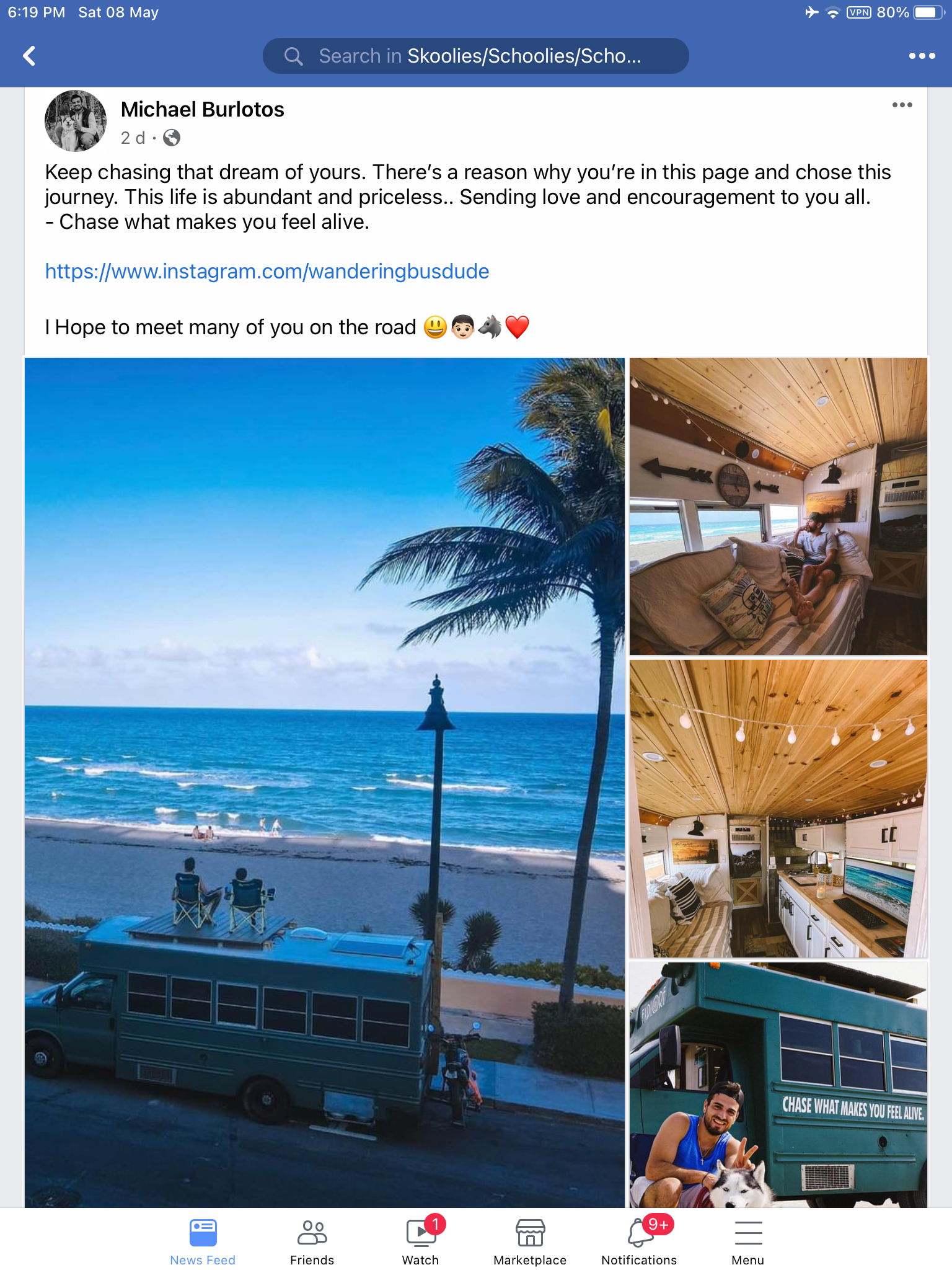
We’d also considered the Skoolie route.  Belize has plenty of used school buses, so we could have found a bus and built our own custom overlander vehicle.  We put a fair amount of thought into this project, and at one point were even getting a little excited about this option since we could fix it up to carry whatever we wanted to carry, and make it into a mobile tiny home that could function off grid just about anywhere.  


A Facebook post of a beautiful Skoolie.
You can see why this idea was attractive. 

However, this plan had the same problem as the Class C camper, in that when the bus broke down, which is even more inevitable in a very used school bus than in a new to new-ish Class C, we would be homeless.  Tom, after a day of tough driving on the Western Highway construction zone with buses, also had some reservations about driving a bus on roads in Mexico and Central America, and we recognized that there would be places where a bus either wouldn’t fit or would just be extremely difficult to drive.  Also, we wanted 4WD, which is not a feature on school buses.  Finally, we were doing our research, and found that there can be a bit of a stigma about Skoolies in the USA, and they aren’t allowed in all campgrounds and many municipalities have strict rules about where they can be parked.  


That was how we got to the slide-in truck camper concept, and why we had gone ahead and bought a truck that would be suitable for a truck camper.  But, as the pandemic dragged on, and we realized our property wasn’t going to sell in the near future, we came to terms with the fact that we wouldn’t be heading north to buy a truck camper any time soon.  We started thinking about how to turn the wait into a positive thing.  


The first positive thing was that the property sale hadn’t happened, so we were still in a place we love. The timing of the pandemic also turned out to be fortuitous for us.  The project to pave and improve our road had started just before the pandemic hit, and the electric company had installed poles to bring electricity to our neighborhood.  When the road is paved and the electricity is in, our property value will rise appreciably, and keeping the tourists and expats likely to be interested in this type of property out of the country while the dirty work for these improvements happens has really worked in our favor.  


Current state of the road.  Getting there!


We are hoping (although not planning) that by the end of the year the construction will be done, and the noise and dust and heavy machinery will be gone.  We are also hoping (and also again not planning) that our electricity will be hooked up, so we will be selling a more valuable, more accessible property that is on the grid.


Current state of our electricity...ready and waiting!


The second positive thing is just knowing we have time to do what we want.  While we had decided that the slide-in truck camper was the best of our options, we recognized that we would have to make compromises and do some customization. Realizing we had the time, we thought back to ideas we had come up with about the Skoolie concept, and started thinking about building some sort of camper from scratch to go on the flatbed.  What started as a “what if?” discussion over drinks one night has turned into dream that is about to turn into reality, and we are now well down the path to creating our own overlander vehicle that will meet all of our requirements and become our home for an extended time while we travel.


Saturday, May 1, 2021

Our Plans Changed Too

Way back in November 2019, a year and a half ago, we created this blog and entered the initial post.  We completed the mentioned truck purchase in January 2020, and were in the midst of finessing our plans and route, and researching truck campers that would fit on the 14-foot flatbed.  Tom was figuring out what maintenance and tweaks the truck, which had mostly been sitting for five years, would need before driving it tens of thousands of miles.  We had the property on the market, and were getting some interest, and one of our biggest points of discussion was where we would go first.  This depended on where we found a camper that would suit us, the time of the year we would leave so we would know what part of the US we would visit first based on seasonal weather, and if there was anyone we wanted to visit before we started our big trip.

Then, Covid.


We spent most of the first half of 2020 doing what everybody else was doing:  following the news, figuring out how to live day to day with the new rules, wondering how long it was going to last, and coming to terms with the fact that our plans were pretty much up in smoke, and we weren’t even in a position to make new plans.  However, we found that our home here in Belize was an ideal place to ride out the pandemic, so we decided to settle in for the long haul, and come up with a plan, or at least a sort of plan, that didn’t have any dependencies on timing and which had a whole lot of flexibility.


The For Sale sign came down.

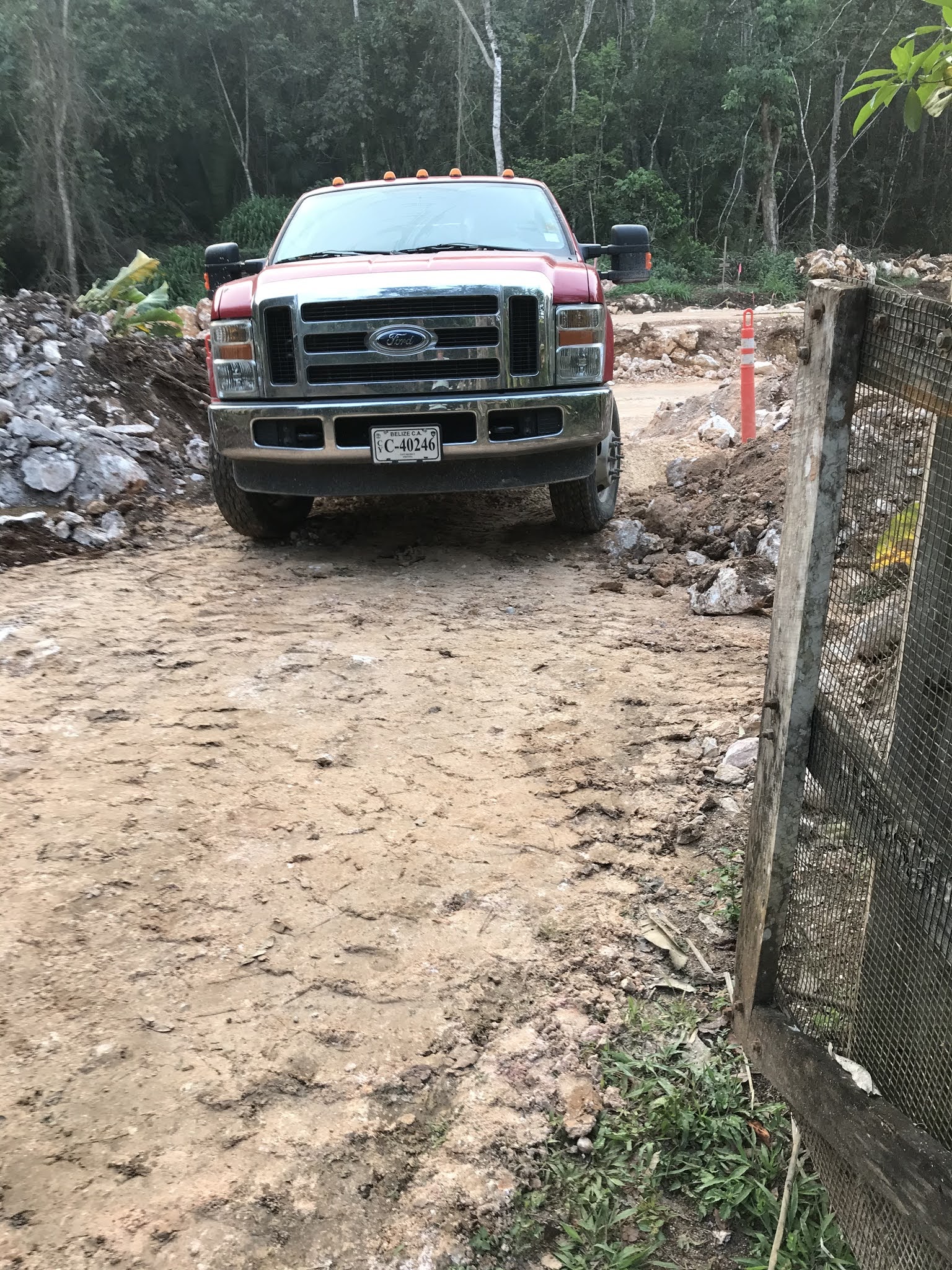
In the chaos of covid and construction, we had the truck.

The first thing we did was stop promoting the property sale.  It was still listed, but since we couldn’t leave Belize if it sold and we’re very comfortable here, we weren’t overly anxious for a sale.  We spent some time wondering how long the pandemic would last, but, lacking a crystal ball and considering the fact that a year later nobody yet has a good idea of future restrictions, we didn’t waste too much energy on that.  We weren’t terribly upset that borders were closed, because we didn’t think we’d want to travel through neighboring countries anyway, and restrictions for interstate travel in the US were changing day to day, so we didn’t know what we could do in the US even if we could get there.


And, with the covid situation here in Belize constantly changing, we spent most of our time just figuring out what we needed to do to prepare for what could have been a very long shutdown. As it’s turned out, Belize has handled the crisis remarkably well for a small country with limited resources, but there were enough points in time where we, and everybody else, were just waiting to see what happened.  Through this time, we didn’t mind putting our future travel plans on hold, since just figuring out how to navigate the crisis took plenty of time and energy, and we were happy to wait.  But, eventually, we started to get a little itchy and began coming up with a way to keep the dream alive and feel like we were making progress.